Dubai Real Estate Market Report: Key Trends Shaping 2026
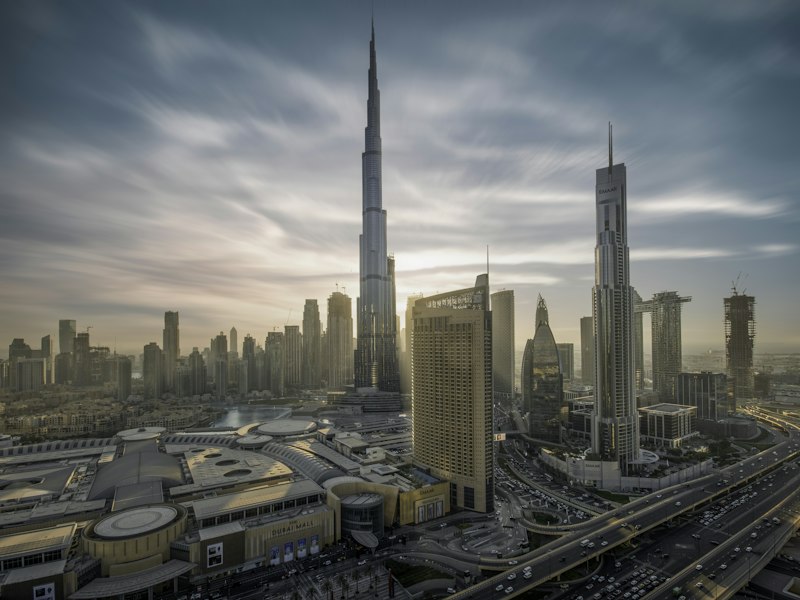
Dubai's real estate market has entered 2026 with extraordinary momentum. After a record-breaking 2025 in which total transaction values surpassed AED 760 billion according to the Dubai Land Department (DLD), the first half of 2026 has shown no sign of a slowdown. Population growth, infrastructure expansion, and sustained international capital flows are fuelling demand across every segment — from ultra-luxury villas on Palm Jumeirah to affordable studios in emerging communities. This report analyses the key data points, trends, and forecasts shaping the market for the remainder of 2026 and beyond.
Transaction Volume: Records Continue to Fall
DLD data for H1 2026 reveals that Dubai recorded over 95,000 property transactions in the first six months, a 14 per cent increase over the same period in 2025. The total transaction value exceeded AED 400 billion, putting the market on track to surpass AED 800 billion for the full year. This growth is being driven by several factors:
- New investor nationalities: While Indian, British, and Russian buyers remain the top three nationalities by volume, 2026 has seen significant growth from Chinese, Central Asian, and Latin American investors, attracted by Dubai's tax-free status, Golden Visa programme, and lifestyle appeal.
- Repeat buyers: According to Knight Frank, approximately 35 per cent of transactions in H1 2026 involved repeat buyers — investors who have already made a profitable purchase and are reinvesting gains into additional units.
- Corporate relocations: The post-pandemic wave of corporate relocations to Dubai continues, with firms in technology, financial services, and professional services establishing regional headquarters and driving demand for both commercial and residential space.
Population Growth: The Engine Behind Demand
Dubai's population has grown by an estimated 200,000 or more new residents annually over the past three years, according to the Dubai Statistics Center. The emirate's population now exceeds 3.8 million and is projected to reach 5.8 million by 2040 under the Dubai 2040 Urban Master Plan. This growth is driven almost entirely by immigration — professionals, entrepreneurs, and families relocating for work, business, or lifestyle reasons.
The mismatch between population growth and housing delivery is a structural feature of the current market. While developers are launching projects at pace, the time lag between launch and handover (typically 3-4 years for off-plan projects) means that ready-to-move-in inventory remains tight in popular communities. This supply-demand imbalance is the primary driver of rent increases and price appreciation in the ready market.
Villa vs. Apartment Performance
The villa segment has been the standout performer in 2026, continuing a trend that began during the pandemic. CBRE data shows that villa prices have appreciated by an average of 18 per cent year-on-year in established communities such as Arabian Ranches, Dubai Hills Estate, and Jumeirah Golf Estates. The supply of villas is inherently limited — you cannot stack villas vertically — and demand from families seeking space and privacy has been relentless.
Apartments have also performed well, with average price appreciation of 10-14 per cent year-on-year across the broader market. However, there is significant variation by community. Premium waterfront locations (Palm Jumeirah, Dubai Marina, JBR) have seen appreciation of 15-20 per cent, while more affordable communities in the outer ring have appreciated in the 6-10 per cent range.
Off-Plan vs. Ready Market: The 65/35 Split
One of the defining features of the current cycle is the dominance of off-plan sales. DLD data shows that approximately 65 per cent of all residential transactions in H1 2026 were off-plan, with 35 per cent in the secondary (ready) market. This ratio has shifted significantly from the 50/50 split seen as recently as 2023.
Several factors explain the off-plan surge:
- Attractive payment plans: Developers are offering payment plans that spread costs over 5-7 years, sometimes extending beyond handover. A typical plan might require just 10-20 per cent during construction, with 80 per cent payable at or after handover.
- Price differential: Off-plan units are typically priced 15-25 per cent below comparable ready units in the same community, offering built-in capital appreciation potential.
- New community appeal: Projects in emerging districts such as Expo City Dubai, Dubai Islands, and Dubai South offer modern specifications and master-planned amenities that older ready inventory cannot match.
Browse our complete project listings to compare off-plan and ready properties across all Dubai communities.
Download Our Full Market Report
Get detailed charts, community-level pricing data, and our H2 2026 forecast delivered to your inbox.
Request the ReportThe Branded Residences Boom
Dubai has established itself as the global capital of branded residences. According to Savills, the emirate accounts for more branded residential projects than any other city in the world. In 2025-2026 alone, launches have included:
- Bugatti Residences by Binghatti in Business Bay
- Mercedes-Benz Places by Binghatti in Downtown Dubai
- Four Seasons Private Residences on Jumeirah Beach
- The Ritz-Carlton Residences in Dubai Creekside
- Armani Beach Residences on Palm Jumeirah
Branded residences command a 25-45 per cent premium over non-branded equivalents, justified by superior finishing, hotel-grade amenities, and the prestige of the brand name. For investors, the appeal lies in stronger resale values and the ability to attract premium tenants. For end-users, it is about a lifestyle package that non-branded developments struggle to replicate.
Our developer directory profiles the key players behind these branded launches.
Rental Market: Tightness Persists
Dubai's rental market remains exceptionally tight. Average rents across the emirate have increased by approximately 15 per cent year-on-year as of mid-2026, with some communities experiencing even sharper increases. The Real Estate Regulatory Agency (RERA) Rental Index — which governs permissible rent increases for existing tenants — has been adjusted upward several times, but market rents for new leases continue to rise faster than the index.
Key rental market data points:
- Average studio rent (city-wide): AED 45,000-65,000 per annum
- Average 1-bedroom rent: AED 70,000-120,000 per annum
- Average 2-bedroom rent: AED 110,000-180,000 per annum
- Gross rental yields: 5.5-8.5 per cent depending on community and unit type
These yields compare very favourably with London (2-3 per cent), Hong Kong (2-3 per cent), and Singapore (3-4 per cent), helping to explain the sustained flow of international capital into the Dubai market.
Forecast: What to Expect in H2 2026
JLL and Knight Frank both forecast continued price appreciation of 8 to 12 per cent across the broader Dubai market for the full year 2026, with the villa segment likely to outperform apartments. Key factors supporting the forecast include:
- Continued population growth driven by corporate relocations and lifestyle immigration
- Limited ready supply in popular communities
- Infrastructure investment: The Dubai Metro Blue Line, Etihad Rail, and airport expansion projects are boosting connectivity and opening new corridors for development
- Regulatory stability: The DLD and RERA continue to provide a transparent, investor-friendly regulatory environment
- Global safe haven appeal: Geopolitical uncertainty in other regions continues to drive capital to Dubai as a perceived safe haven
Risks to the outlook include a potential oversupply of apartments in 2028-2029 as the current wave of off-plan launches reaches handover, a global economic slowdown affecting international capital flows, and the impact of rising service charges on net yields.
How Dubai Compares to Global Cities
For international investors, Dubai's proposition is best understood in a global context. A luxury two-bedroom apartment in Dubai Marina costs roughly AED 2.5-4 million (USD 680,000-1,090,000). An equivalent unit in central London would cost USD 1.5-2.5 million, in Manhattan USD 2-3.5 million, and in Hong Kong USD 2-4 million — all with significantly lower rental yields and substantially higher tax burdens. Dubai charges zero income tax, zero capital gains tax, and zero property tax, with the only government levy being the 4 per cent DLD transfer fee at the point of purchase.
This combination of competitive pricing, strong yields, tax efficiency, and lifestyle appeal explains why Dubai continues to attract record levels of international property investment.
Invest With Confidence
Our advisors help you navigate the Dubai market with data-driven insights. Get personalised recommendations based on your budget and goals.
Book Your Free ConsultationWhether you are a first-time buyer or expanding an existing portfolio, our team at ATAM Properties is here to help you make informed decisions in one of the world's most dynamic property markets. Get in touch today.
ATAM Properties
Real estate expert with extensive knowledge of Dubai's property market.
