Top 5 Upcoming Mega-Projects That Will Transform Dubai by 2030
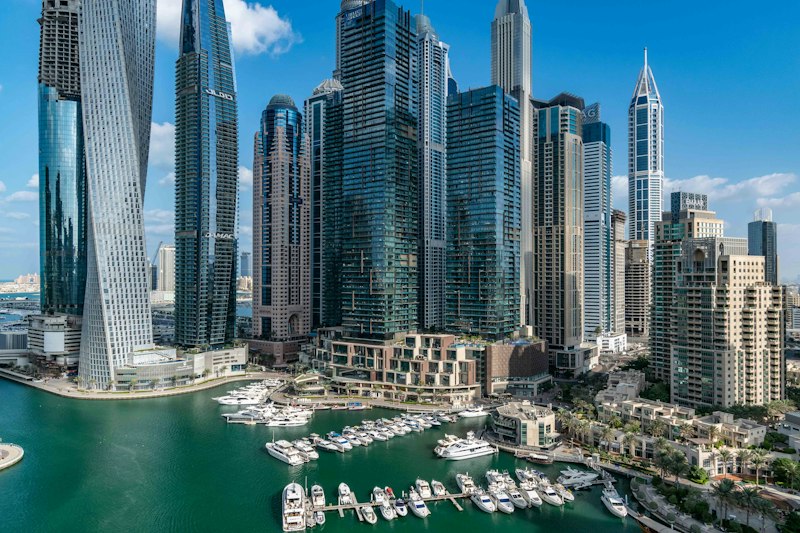
Top 5 Upcoming Mega-Projects That Will Transform Dubai by 2030
Dubai has always been a city built on ambition executed at scale. From the Palm Jumeirah — which redefined what was physically possible in coastal development — to the Burj Khalifa, which held the world's tallest building title for over a decade, the city's DNA is written in mega-projects. But the next wave of developments currently underway makes everything that came before look like a warmup.
Between 2025 and 2030, five mega-projects will collectively reshape Dubai's geography, demographics, and investment landscape. These are not speculative concepts on a developer's mood board — they are funded, under construction, or in advanced planning with government backing and committed infrastructure spending. Here is what investors need to know about each one.
1. Dubai South and Expo City Dubai: The New Urban Centre
Dubai South is arguably the most consequential development in the emirate's modern history. Spanning approximately 140 square kilometres — roughly twice the size of Hong Kong Island — this master-planned district is designed to become a self-sustaining city within a city, anchored by Al Maktoum International Airport, which is earmarked to become the world's largest airport with an eventual capacity of 260 million passengers annually.
Expo City Dubai, built on the Expo 2020 site within Dubai South, is the cultural and commercial nucleus. The AED 25 billion+ infrastructure from Expo 2020 has been repurposed into a mixed-use district featuring the Museum of the Future (Expo edition), Sustainability Pavilion, and Terra — alongside offices, residences, and retail.
Investment implications:
- Current pricing: Apartments in Dubai South currently average AED 750-1,100 per sqft — approximately 50-60% below Dubai Marina or Downtown. This gap will narrow as infrastructure matures.
- Employment anchor: DP World, Emirates airline operations, logistics free zones, and the planned airport expansion will generate an estimated 500,000+ jobs within the district by 2035.
- Metro connectivity: Route 2020 (the Dubai Metro Red Line extension) already connects Expo City to the broader metro network. Further extensions are planned.
- Risk factor: The timeline for Al Maktoum Airport expansion has shifted multiple times. Full build-out is a 15-20 year horizon, meaning early investors need patience and a long-term view.
2. Dubai Creek Harbour: The Next Downtown
Developed by Emaar Properties in a joint venture with Dubai Holding, Dubai Creek Harbour is positioned as the successor to Downtown Dubai. The project occupies a 6 square kilometre waterfront site along Dubai Creek, with the centrepiece being Dubai Creek Tower — originally designed to surpass the Burj Khalifa in height (though current plans have been revised to focus on a redesigned landmark structure).
The district's real anchor, however, is the planned Dubai Square — a retail and entertainment destination conceived as the next evolution beyond Dubai Mall. The project combines 8 million sqft of retail, dining, and entertainment space with a technology-integrated design emphasising experiential commerce over traditional shopping.
What is already delivered and underway:
- Creek Beach, Creek Rise, Creek Waters, and Palace Residences — multiple residential towers are now complete and occupied, establishing a resident base and proving the location's liveability.
- The Island District — a premium waterfront cluster with villas and branded residences currently under construction.
- Creek Marina — a yacht marina and boardwalk providing lifestyle infrastructure that supports property premiums.
Investment implications:
- Current pricing: Apartments range from AED 1,400-2,200 per sqft, with waterfront and island units commanding premiums. This represents a 20-30% discount to equivalent Downtown Dubai product.
- Capital appreciation trajectory: As the community matures and remaining infrastructure (retail, metro access, the tower/landmark) is delivered, expect the price gap to Downtown to narrow materially.
- Rental demand: Creek Harbour's proximity to Ras Al Khor Wildlife Sanctuary and its waterfront setting give it a lifestyle positioning that commands 10-15% rental premiums over comparable inland communities.
- Risk factor: The timeline for Dubai Square and the landmark tower remains fluid. Value is being created regardless, but the full vision's delivery date is uncertain.
3. Palm Jebel Ali: Palm Jumeirah's Bigger Sibling
Announced originally in 2002 and shelved after the 2008 financial crisis, Palm Jebel Ali was formally revived by Nakheel in 2023 with a completely redesigned master plan. The new Palm Jebel Ali is planned to be approximately twice the size of Palm Jumeirah, featuring over 80 hotels and resorts, 16,000+ residential units, and 4,800+ beach villas.
The project benefits from Nakheel's merger with Dubai Holding's real estate portfolio, creating a combined entity with the financial firepower and land bank to execute a project of this scale. Reclamation work has commenced, and the first residential phases are expected to launch for sale by late 2025 or early 2026.
Investment implications:
- Entry pricing: While pricing details for the initial launch have not been formally confirmed, market expectations suggest entry points of AED 2,000-3,000 per sqft for apartments and AED 2,500-4,000+ for villas — positioned below Palm Jumeirah's current AED 3,500-5,500 range but at a premium to mainland communities.
- Palm Jumeirah comparison: Early investors in Palm Jumeirah (2002-2005) purchased at AED 800-1,200 per sqft. Those properties now trade at AED 3,500-5,500. While history rarely repeats exactly, the directional opportunity is clear for those with a 5-10 year horizon.
- Infrastructure advantage: Palm Jebel Ali's location near Dubai South and Al Maktoum Airport means it benefits from the broader infrastructure investment in that corridor.
- Risk factor: This is a 10-15 year build-out. The first phases carry the highest risk and the highest potential return. Nakheel's track record with Palm Jumeirah provides credibility, but the scale of reclamation and construction means delays are probable.
4. The Dubai-Abu Dhabi Corridor and Regional Connectivity
While not a single project, the emerging Dubai-Abu Dhabi development corridor — anchored by the Etihad Rail network and potential hyperloop connections — represents a fundamental shift in how the UAE's urban geography will function. Alongside this, the broader UAE-Saudi economic alignment is creating a regional super-corridor that connects Dubai's economy to Saudi Arabia's NEOM and Red Sea megaprojects.
Key developments:
- Etihad Rail: The UAE national railway network, currently under construction, will connect Abu Dhabi, Dubai, and the Northern Emirates with freight and passenger services. Journey time between Abu Dhabi and Dubai will shrink to under 50 minutes, effectively merging the two cities' labour and property markets.
- Dubai-Abu Dhabi property price arbitrage: Prime Abu Dhabi currently trades at 30-40% below equivalent Dubai positioning. Rail connectivity will compress this gap, benefiting properties along the corridor — particularly in Dubai's Jebel Ali and Dubai South areas.
- Saudi corridor effects: Saudi Arabia's AED 1.8 trillion+ investment pipeline (NEOM, The Line, Red Sea Global, Diriyah Gate) will generate demand for Dubai-based professional services, creating indirect economic stimulus that supports Dubai's property market.
Investment implications:
- Corridor communities: Properties in Dubai South, Jebel Ali, and Dubai Investment Park benefit from both airport-driven growth and corridor connectivity.
- Commercial real estate: Office and logistics space along the corridor will see increased demand as regional trade volumes grow.
- Risk factor: Regional geopolitics and the execution timeline of Saudi mega-projects create uncertainty. These are macro trends that play out over decades, not quarters.
5. Dubai Urban Master Plan 2040: Five Urban Centres
The Dubai 2040 Urban Master Plan is the strategic framework that ties all individual mega-projects together. Released by Sheikh Mohammed bin Rashid Al Maktoum, the plan designates five distinct urban centres that will serve as the emirate's growth nodes through 2040:
- Deira and Bur Dubai (Historic Centre): Urban renewal, heritage preservation, and waterfront development along Dubai Creek. Population target: 600,000+.
- Downtown and Business Bay (Financial Centre): Continued densification as the commercial and cultural heart of the city. Population target: 500,000+.
- Dubai Marina and JBR (Coastal Centre): Waterfront lifestyle and tourism hub with intensified residential and hospitality development. Population target: 400,000+.
- Dubai Silicon Oasis and Academic City (Knowledge Centre): Technology, education, and innovation cluster designed to attract tech companies and start-ups.
- Expo City / Dubai South (New Centre): The designated growth frontier, absorbing the majority of population expansion through new residential communities, commercial zones, and transport infrastructure.
The numbers behind the plan:
| Metric | 2024 (Current) | 2040 Target | Change |
|---|---|---|---|
| Population | ~3.7 million | 5.8 million | +57% |
| Green/leisure space | ~26 sqm per person | ~40 sqm per person | +54% |
| Public beach length | ~21 km | ~105 km | +400% |
| Nature reserves | ~35% of land area | ~60% of land area | +71% |
| Urban centres | Concentrated (Downtown/Marina) | 5 distributed centres | Polycentric model |
Investment implications:
- Follow the infrastructure: The 2040 plan explicitly identifies where government will invest in metro extensions, road networks, public spaces, and utilities. Properties within or adjacent to designated urban centres will benefit from this spending.
- Polycentric growth reduces concentration risk: As the city develops five distinct centres rather than one, price appreciation will become more evenly distributed across the emirate. Early positioning in emerging centres (particularly Dubai South and the Knowledge Centre) offers the highest upside.
- Beach and green space expansion: The plan's emphasis on increasing public beaches by 5x and green space significantly will enhance liveability in communities that are currently viewed as peripheral, potentially catalysing re-rating in areas like JBR extensions and coastal Dubai South.
Comparative Overview: Mega-Project Investment Framework
| Project | Est. Size / Scale | Current Entry Price (AED/sqft) | Completion Horizon | Risk Level | Return Potential |
|---|---|---|---|---|---|
| Dubai South / Expo City | 140 sq km | 750-1,100 | Phased to 2035+ | Medium | High |
| Dubai Creek Harbour | 6 sq km | 1,400-2,200 | Phased to 2030 | Low-Medium | Medium-High |
| Palm Jebel Ali | 2x Palm Jumeirah | TBD (est. 2,000-3,000) | Phased to 2035+ | Medium-High | High |
| Dubai-Abu Dhabi Corridor | Regional (130km) | 700-1,200 (corridor areas) | Rail by 2030 | Medium | Medium-High |
| 2040 Master Plan (5 Centres) | Emirate-wide | Varies by centre | 2030-2040 | Low | Medium |
How to Approach Mega-Project Investment
Mega-projects offer exceptional long-term returns, but they also demand discipline and clear-eyed risk assessment. The investors who profited most from Palm Jumeirah, Dubai Marina, and Downtown Dubai shared common traits: they bought early, held through construction volatility, and focused on developer credibility over marketing hype.
Here are the principles we advise our clients to follow:
- Prioritise developer track record over renders. Emaar, Nakheel, Dubai Holding, and DAMAC have decades of delivery history. Newer developers launching into mega-project areas may offer lower prices but carry materially higher execution risk.
- Understand the infrastructure timeline. A property's value in a mega-project is largely determined by when surrounding infrastructure (metro, retail, schools, roads) arrives, not when the unit itself is handed over.
- Diversify across timelines. A balanced portfolio might include a near-term play (Creek Harbour Phase 1), a medium-term position (Dubai South), and a long-horizon bet (Palm Jebel Ali). This structures cash flows and reduces concentration risk.
- Plan your exit before your entry. Know whether you are buying for capital appreciation, rental yield, personal use, or a combination — and choose the project and unit type that aligns with that objective.
ATAM Properties tracks every major development in Dubai from announcement through handover, providing clients with real-time project intelligence, developer assessments, and portfolio construction advice. If you are evaluating where to position capital for the next five to ten years, our team can help you cut through the marketing noise and focus on the projects with genuine transformational potential. Contact ATAM Properties to begin your mega-project investment evaluation.
ATAM Properties
Real estate expert with extensive knowledge of Dubai's property market.
